
Fried Ice Cream Roll Machines
Updated 27 November 2026
A fried ice cream roll machine does not make ice cream. It takes ice cream that has already been made and rolls it into thin curls on a chilled plate. Understanding that distinction prevents a common buying mistake: expecting a roll machine to replace a soft serve or hard ice cream machine.
Part of Ice cream machines
Compare configurations
Four facts decide most enquiries: output, product form, structure, and the supply available at your site.
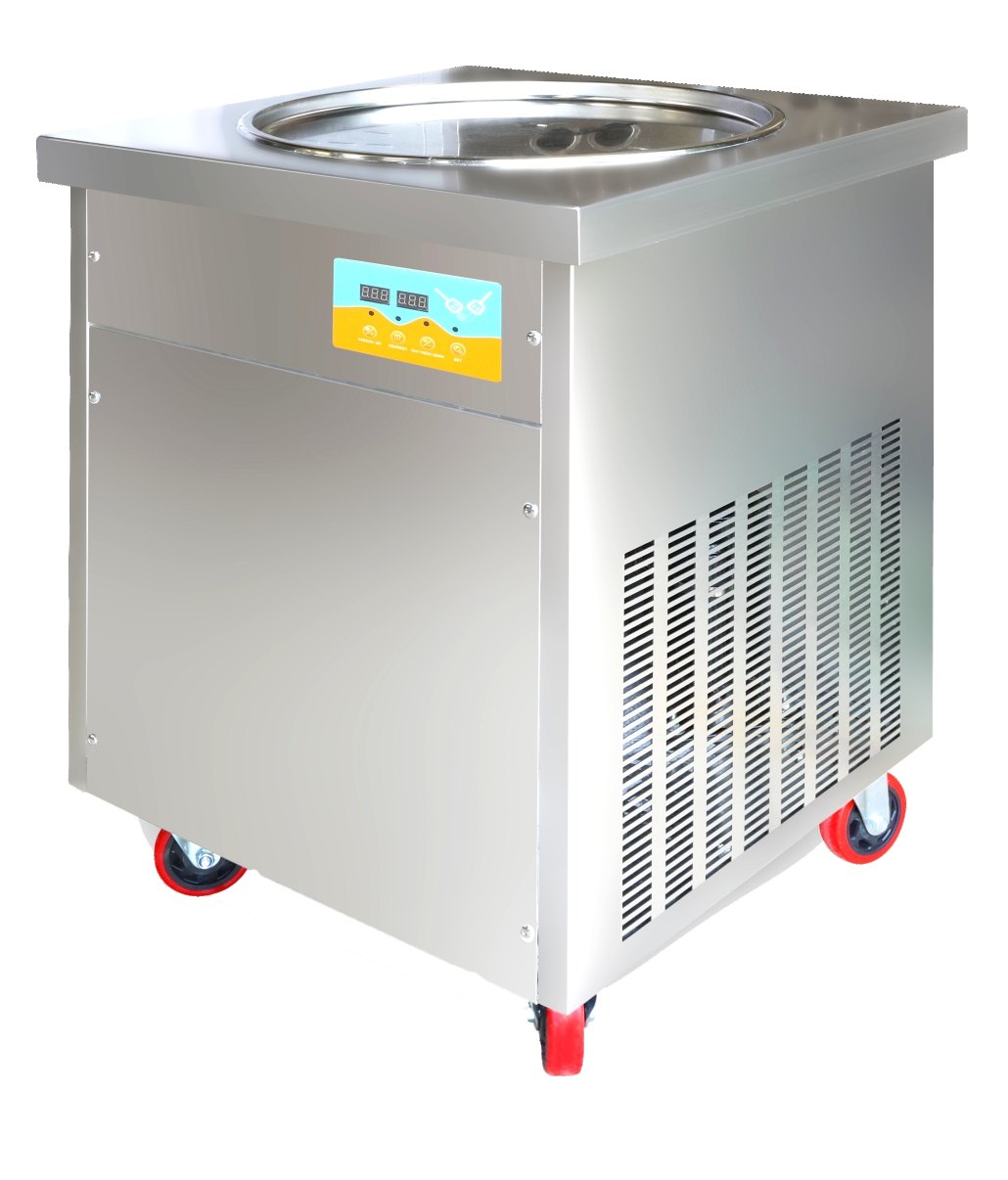
Single pan
- Output
- By configuration
- Stage
- Post-processing
- Structure
- Countertop
- Power supply
- Supply to your requirement
Double pan
- Output
- By configuration
- Stage
- Post-processing
- Structure
- Countertop
- Power supply
- Supply to your requirement
Available options
| Selection factor | Available options |
|---|---|
| Pan | Single pan / double pan |
| Function | Post-processing only — rolls finished ice cream on a chilled plate |
Options are listed by configuration, not by model. Confirm the exact configuration and destination supply in your enquiry; material affects quotation.
Specifications
Configuration values for this category are not published here because they have not been confirmed. Send your requirements in the enquiry form and we will respond with the available configurations.
Photos of this range
Units shown as supplied. Configuration is agreed per order.
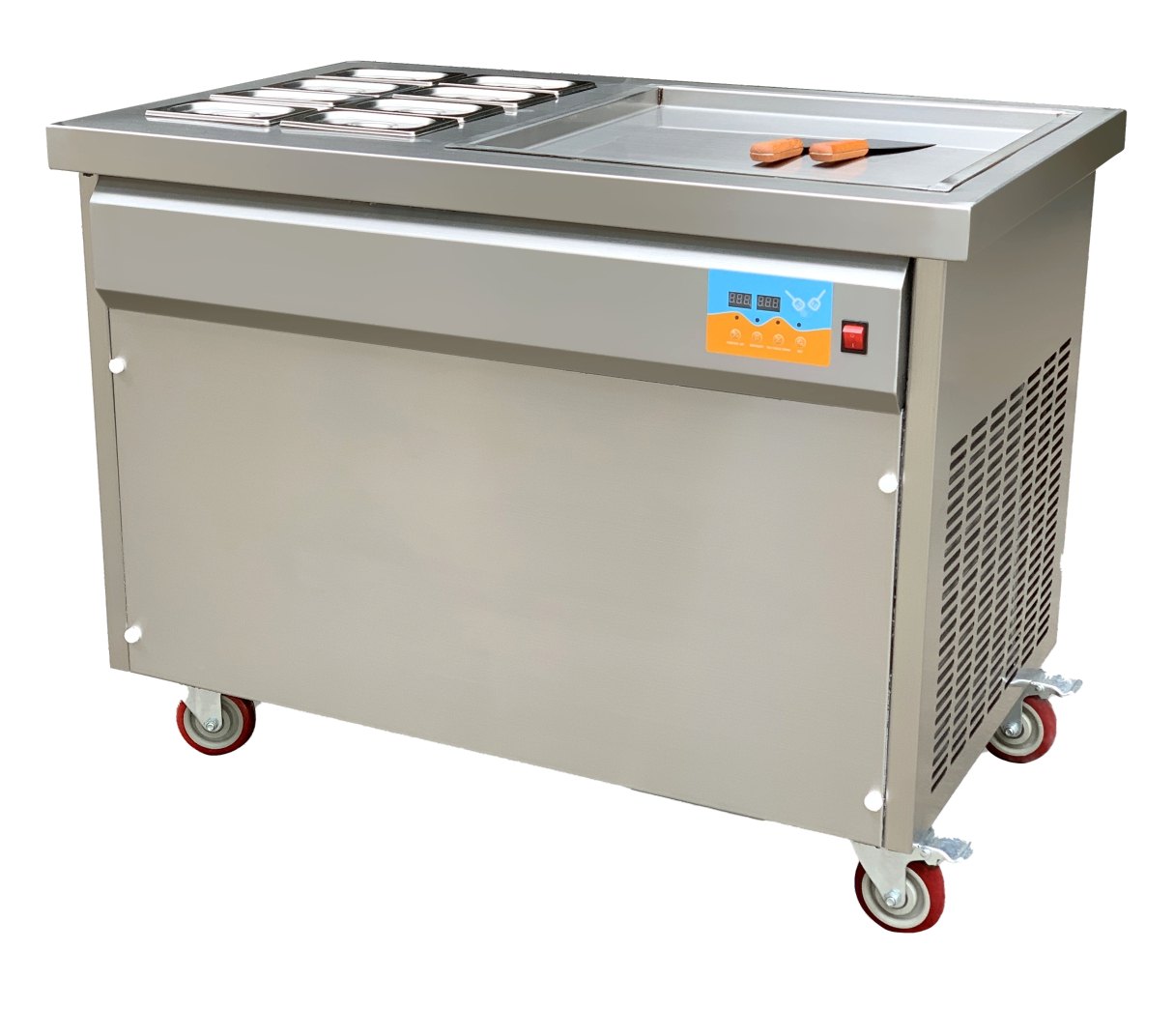
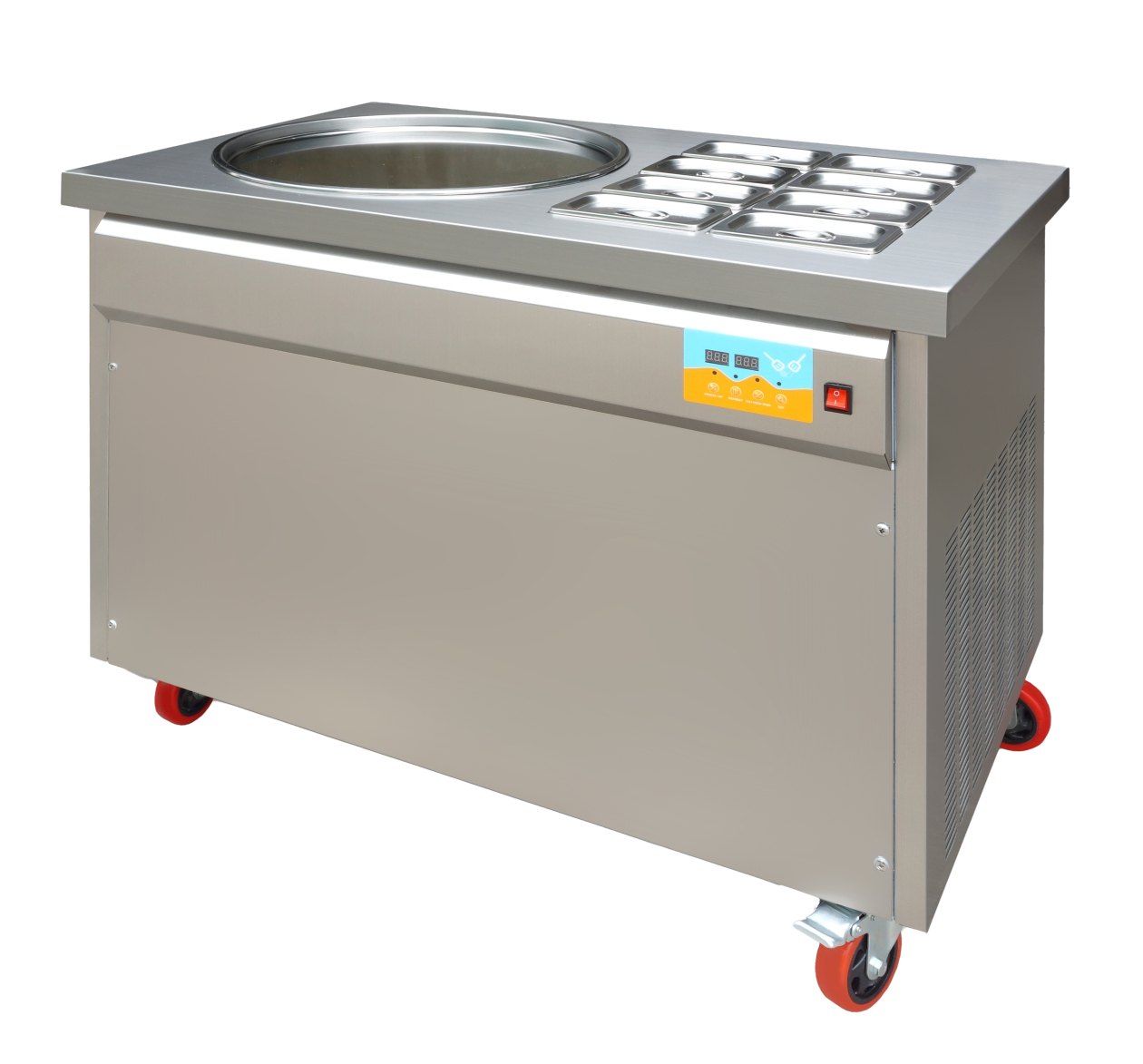
Range: three models by plate size and supply
Three models are offered at present. What separates them is working width, net weight and electrical supply, not a change in what the machine does. A wider plate lets two portions be worked at once, or gives one operator room to spread mix without crowding the edge; a heavier build holds plate temperature more steadily when batch after batch is loaded onto it.
Because the plate is the working surface, ask for plate dimensions and for how quickly it recovers after a batch, not just for a model number. Plate size decides how many portions an operator can finish per hour far more than the compressor rating does.
Supply is confirmed per model and per destination market. State your voltage, frequency and plug shape in the enquiry so the correct variant is quoted rather than adapted afterwards.
What the machine actually does
The chilled plate is held at a temperature low enough to freeze a thin layer of mix or finished ice cream spread across it. As the layer sets, it is scraped and rolled into tight curls, which are then placed in a cup and finished with toppings. The visual effect is the point of the process: the rolls are made in front of the customer, which is why this equipment is common in dessert shops and street-food settings.
Because the plate does the freezing, the mix is usually poured directly onto it rather than being churned in a barrel first. That makes the roll machine self-contained for the final step, but it is still a finishing step. If you are building a full menu, you will also need a way to supply the base product, and the roll machine should be specified alongside that decision.
Single pan or double pan
A single pan machine suits a small counter where one operator makes rolls to order. A double pan gives you parallel plates, which help when two operators work at once or when you want to keep two flavours available. The trade-off is counter space and power draw. Choose on the number of people who will be behind the counter at peak, not on the size of the machine in an empty shop.
Plate diameter, compressor capacity and the rate at which the plate recovers after a batch are the figures that matter. They are not published here because they have not been confirmed against a current configuration. Enquire with the volume you expect and we will give you the matching options.
Where it fits
Roll machines are a good fit for dessert cafes, shopping-mall kiosks, food trucks and any setting where the preparation is part of the attraction. They are less useful in a high-volume operation where speed matters more than presentation and where a simpler scooping workflow would serve more customers per hour.
A typical setup pairs the roll machine with a preparation counter, a freezer for mix and a topping station. You can see how this compares with other shop types on the ice cream shop and bubble tea shop pages. Consumables and replacement parts are listed in the parts catalogue.
Questions buyers ask
Does this machine make ice cream?
No. It rolls a mix or finished ice cream on a chilled plate as a finishing step.
How many pans do I need?
One pan suits a single operator; two pans support parallel work and separate flavours.
What power supply does it need?
Supply is to the customer's requirement. State your voltage and plug shape in the enquiry.
Can it be used outdoors?
It needs a stable supply and ventilation clearance. Confirm the site conditions before ordering.
Related
Equipment for an ice cream shop
How this machine fits into a working setup, with the equipment that goes with it.
Open →Questions buyers ask
Output, supply, materials and what has to be confirmed before an order.
Open →Parts and replacement components
Wear items and spares listed by fitment, for maintenance after the machine is in service.
Open →How orders are handled
Guangzhou Baiyi is an ice cream equipment supplier based in Guangzhou, China.
We are responsible for specification definition, order follow-up, documentation and logistics coordination.
Inspection before shipment can be arranged; scope and provider confirmed at order.
Send your requirements
Tell us where you are and what you need. * Required