
Soft Serve Ice Cream Machines by Configuration
Updated 27 November 2026
A soft serve machine is defined less by its brand than by the job it has to do: how many portions an hour, how many flavours at once, and whether it sits on a counter or on the floor. This page groups our soft serve range by those choices, so you can shortlist a configuration before you ask for a quotation.
Part of Ice cream machines
Compare configurations
Four facts decide most enquiries: output, product form, structure, and the supply available at your site.
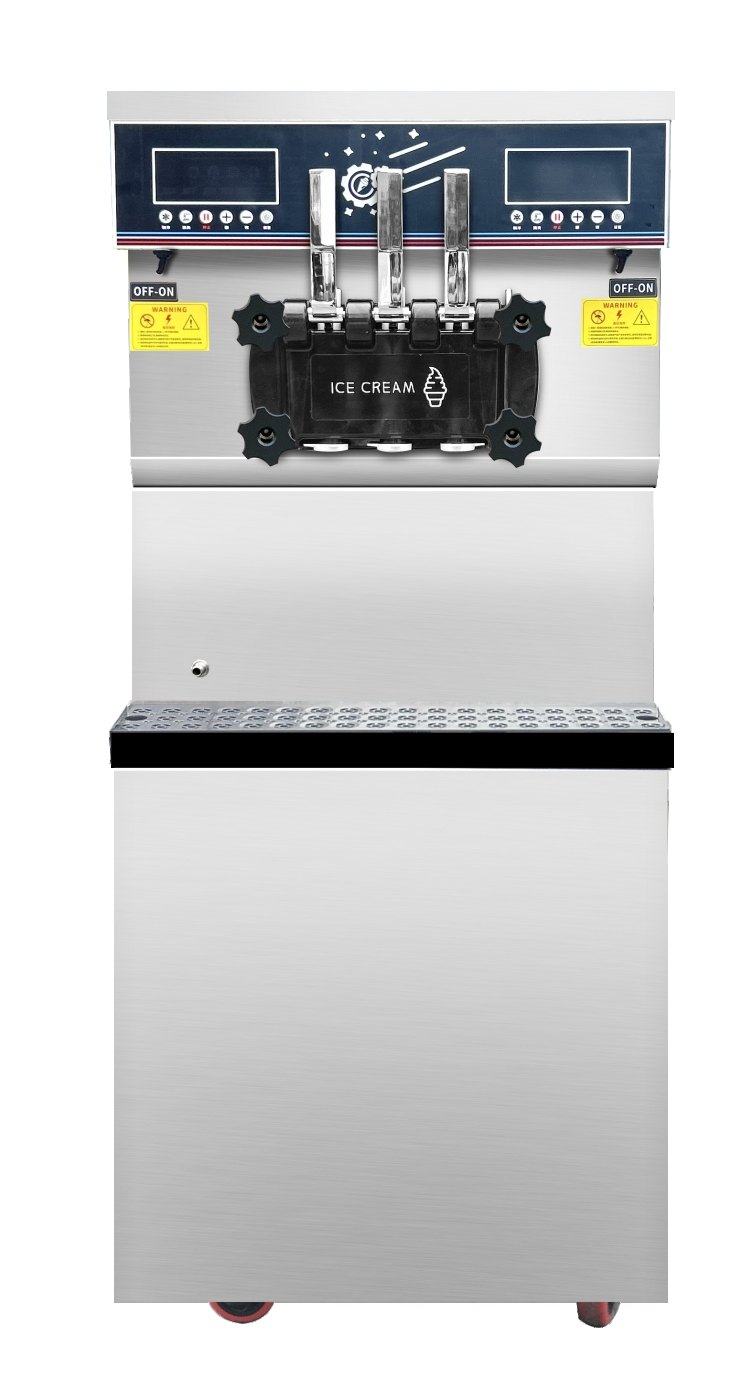
Three-flavour floor standing
- Output
- 58–60 L/h
- Flavours
- 3
- Structure
- Floor standing
- Power supply
- 220V/50Hz · 220V/60Hz · 110V/60Hz
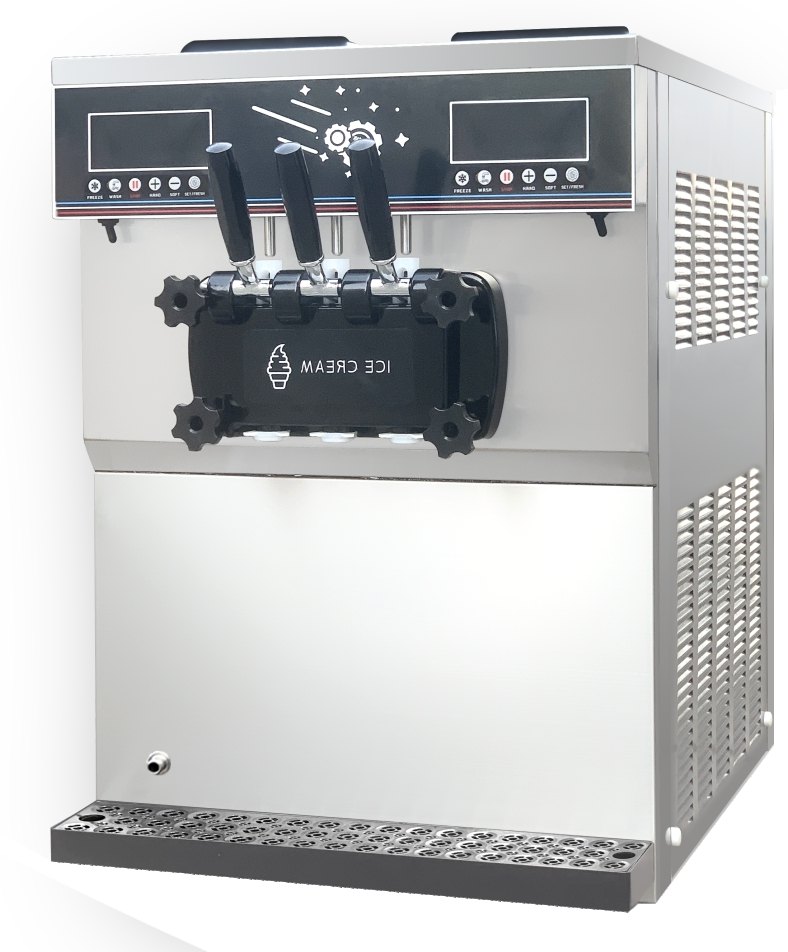
Two-flavour floor standing
- Output
- 25–28 L/h
- Flavours
- 2
- Structure
- Floor standing
- Power supply
- 220V/50Hz · 220V/60Hz · 110V/60Hz
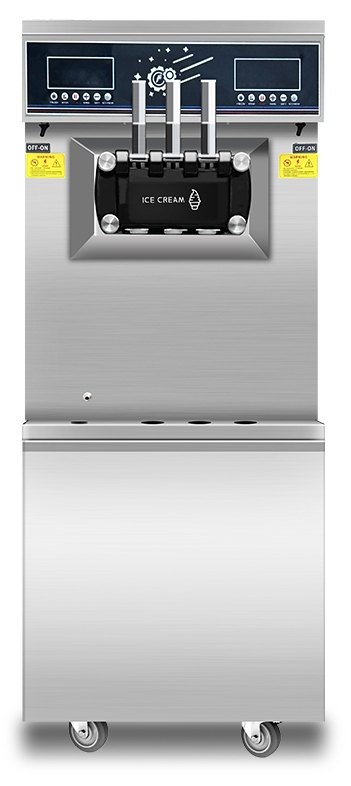
High-output floor standing
- Output
- 70 L/h
- Flavours
- 3
- Structure
- Floor standing
- Power supply
- 380V/50Hz
Available options
| Selection factor | Available options |
|---|---|
| Structure | Countertop / floor standing |
| Cylinders (flavours) | 1 / 2 / 3 / 5 |
| Pre-cooling and overnight keep-fresh | Available / not available — optional |
| Air pump (overrun) | Available / not available — optional |
| Jam outlet (rainbow effect) | Available / not available — optional |
| Shell material | 304 stainless steel / painted steel — material affects quotation |
Options are listed by configuration, not by model. Confirm the exact configuration and destination supply in your enquiry; material affects quotation.
Specifications by configuration
| Configuration | Rated output | Voltage / frequency | Rated power | Refrigerant | Net / gross weight | Product size (mm) | Packing size (mm) |
|---|---|---|---|---|---|---|---|
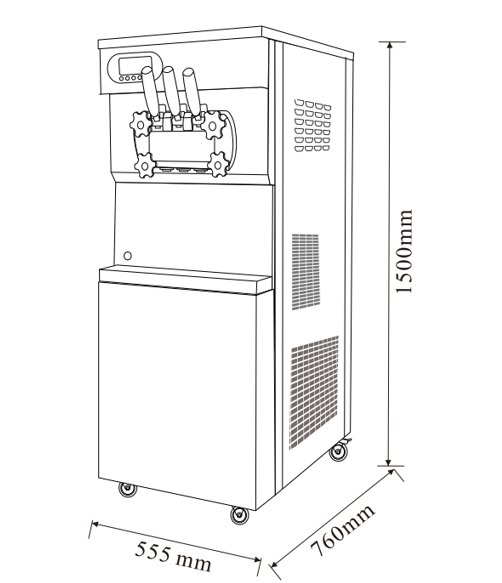
| 3 flavours · floor standing | 58–60 L/h | 220V/50Hz · 220V/60Hz · 110V/60Hz | 4200 W | R22 / R404A / R410A | 180 / 200 kg | 760 x 555 x 1500 | 830 x 620 x 1620 |
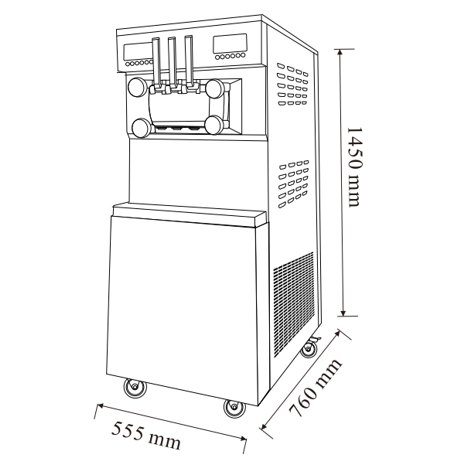
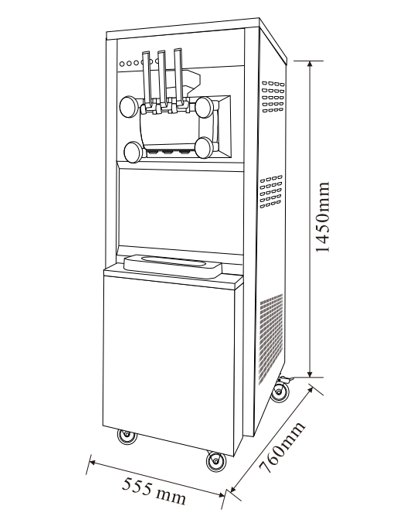
| 3 flavours · floor standing · high output | 70 L/h | 380V/50Hz | 5200 W | R404A / R134A | 200 / 230 kg | 760 x 555 x 1450 | 630 x 840 x 1570 |
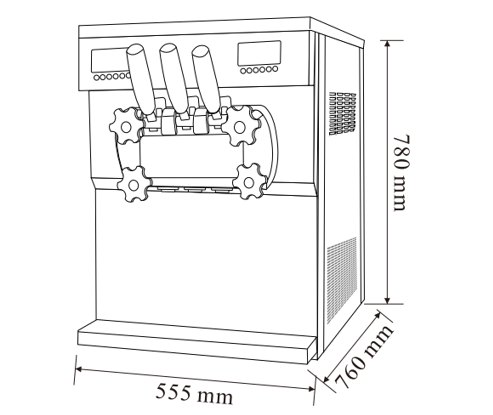
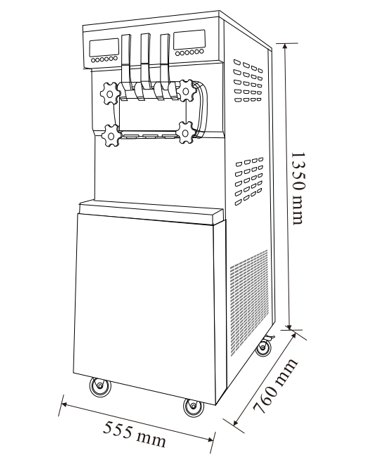
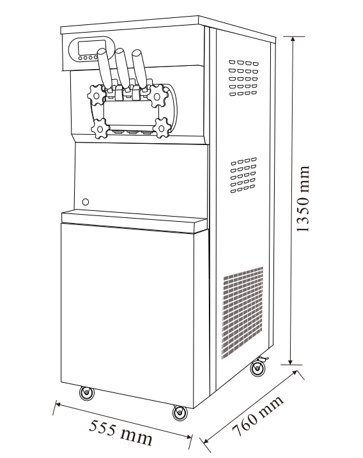
| 2 flavours · floor standing | 25–28 L/h | 220V/50Hz · 220V/60Hz · 110V/60Hz | 2000 W | R22 / R404A / R410A | 120 / 130 kg | 760 x 555 x 1350 | 830 x 650 x 1420 |
Rated output and power are nameplate figures as declared on the machine. Actual output depends on mix temperature, overrun and serving size. Voltage and plug type are supplied to the customer's requirement — tell us what you have.
Figures above are transcribed from the maker's specification sheet and last checked 27 November 2026. A dash means the item is not applicable to that configuration or has not been confirmed yet — ask before ordering.
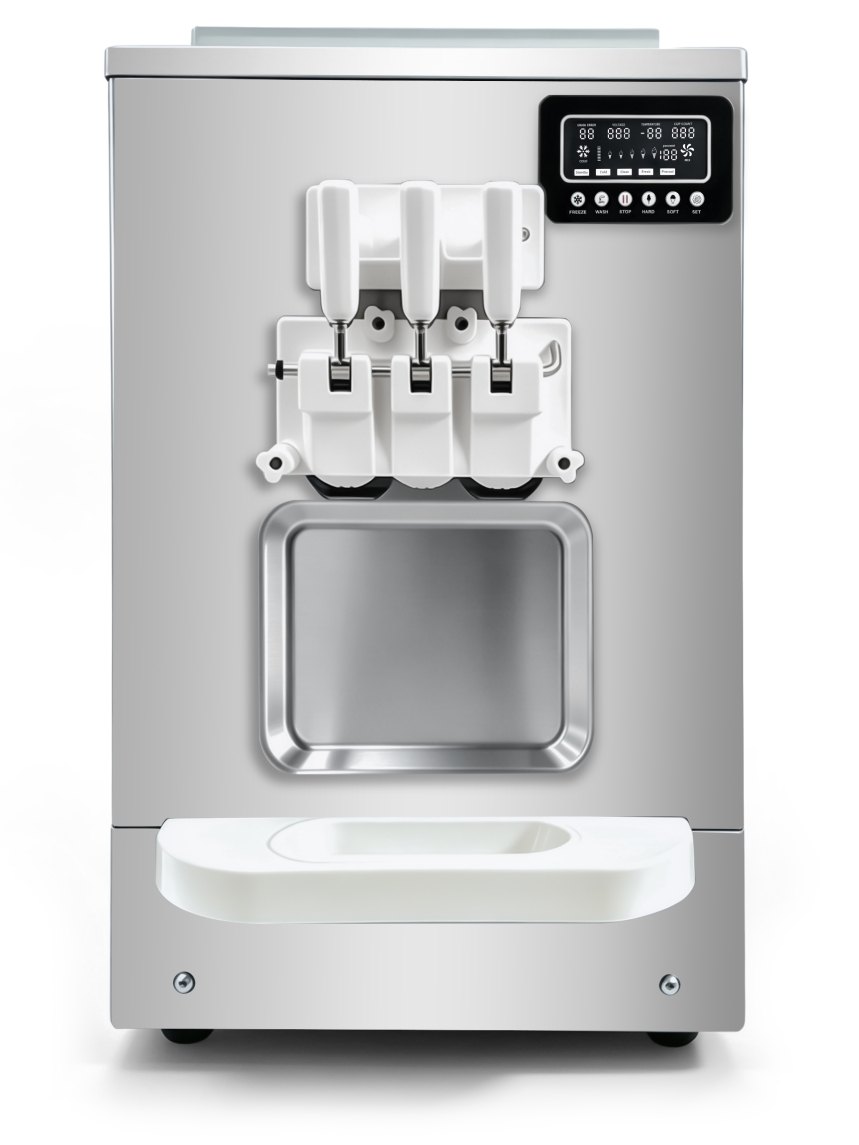
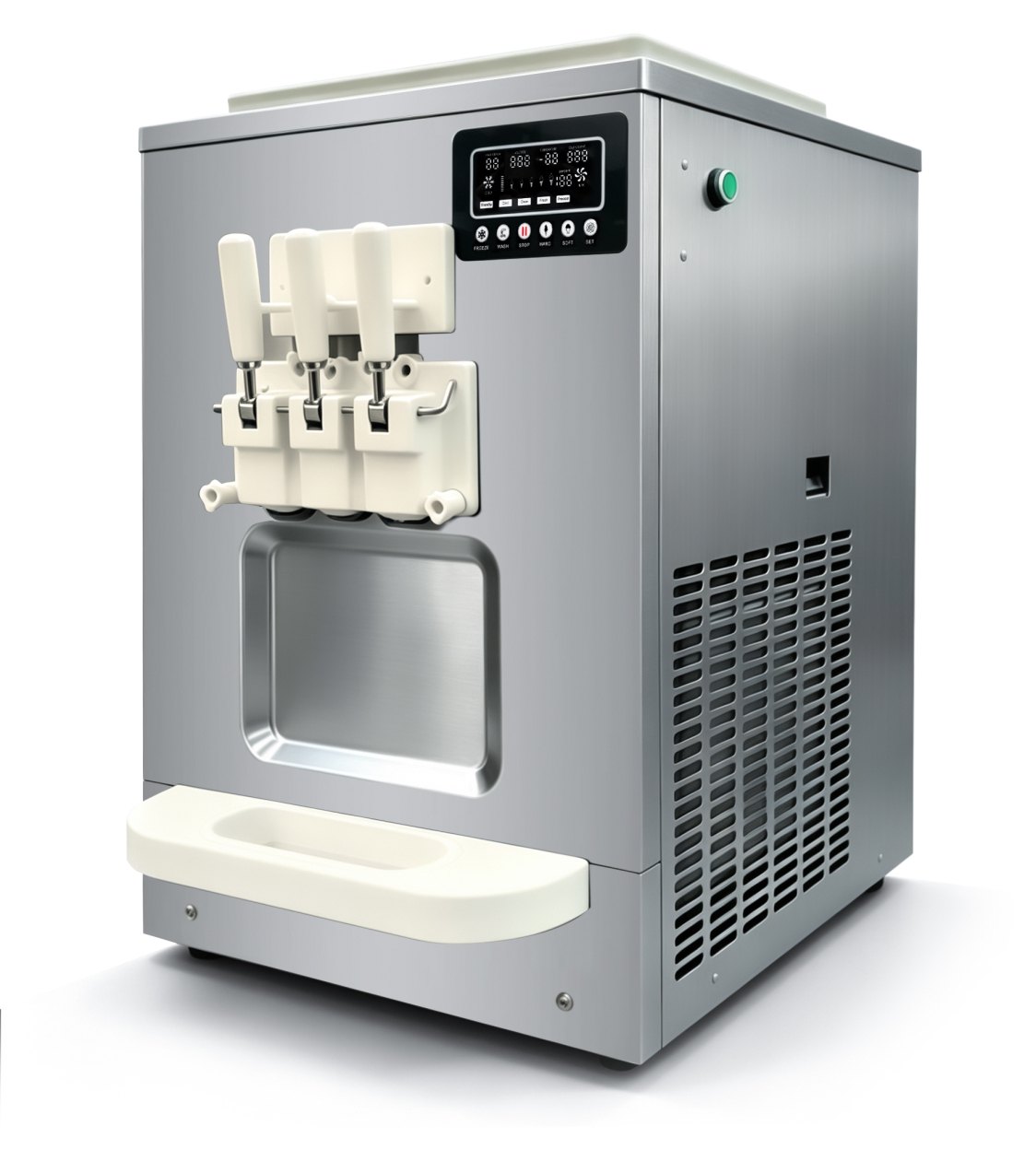
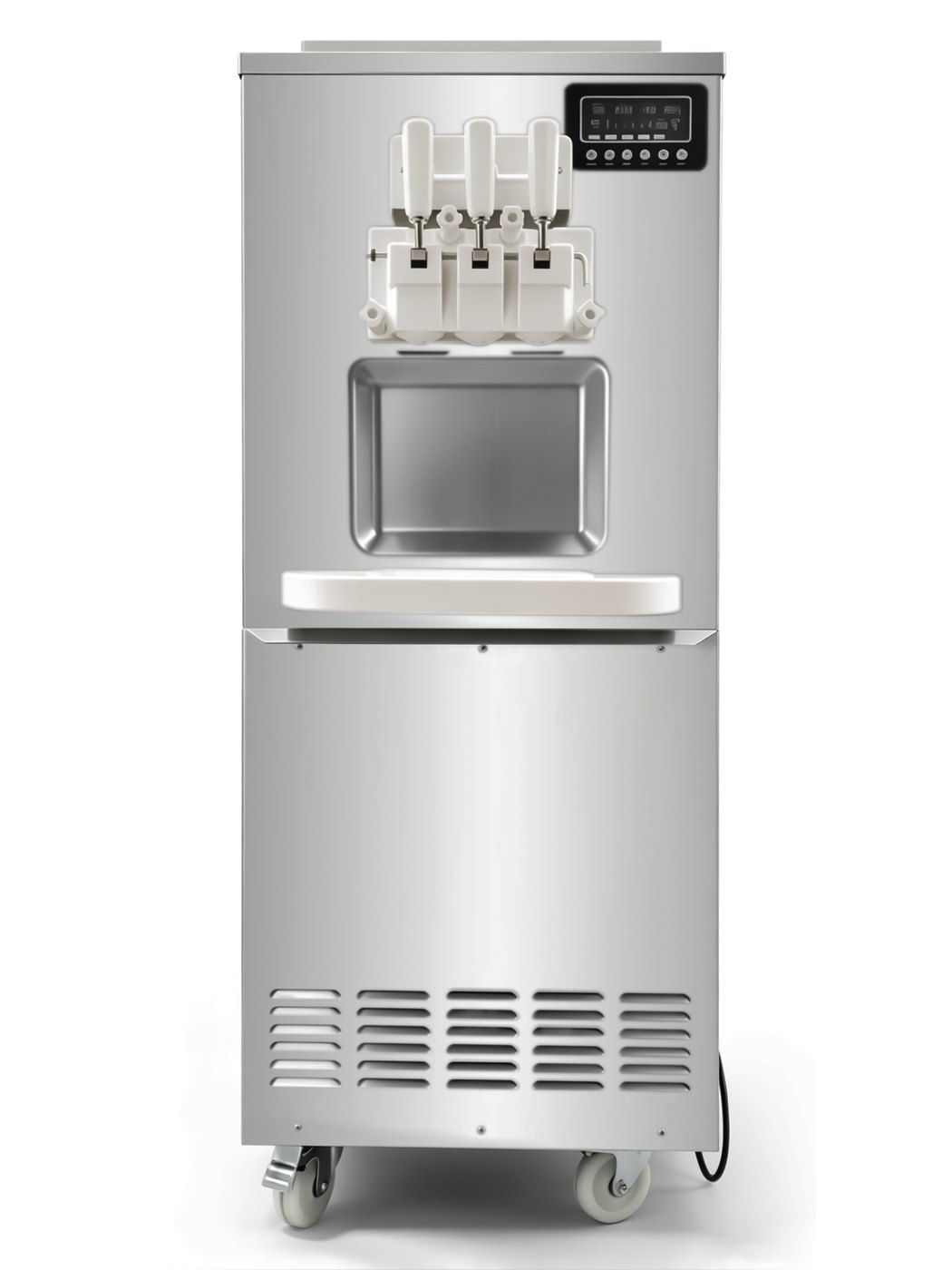
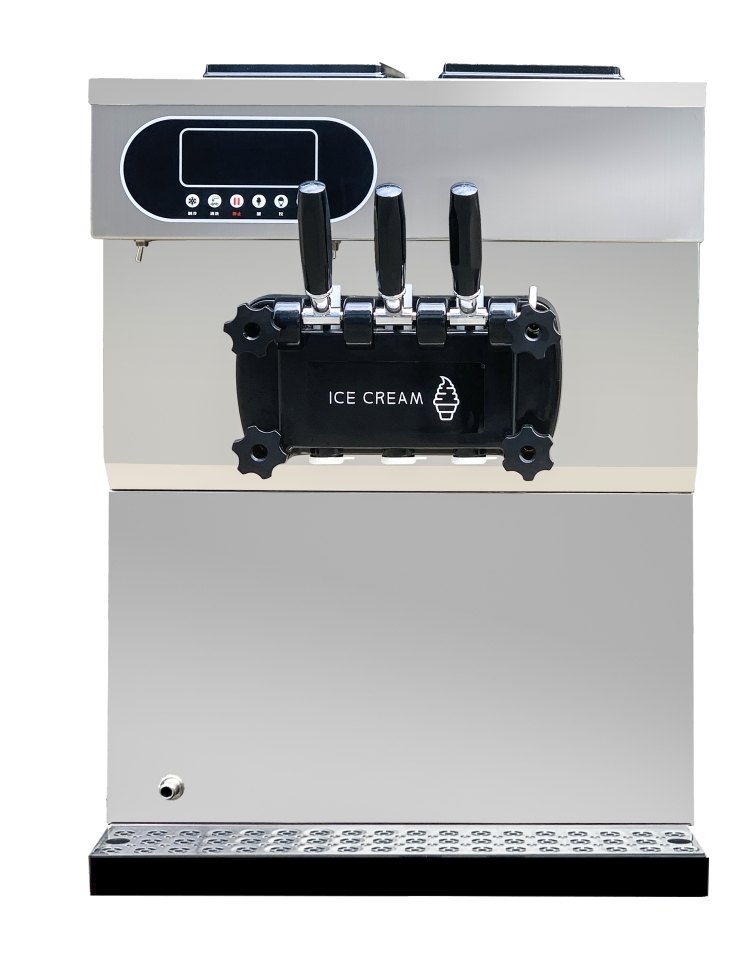
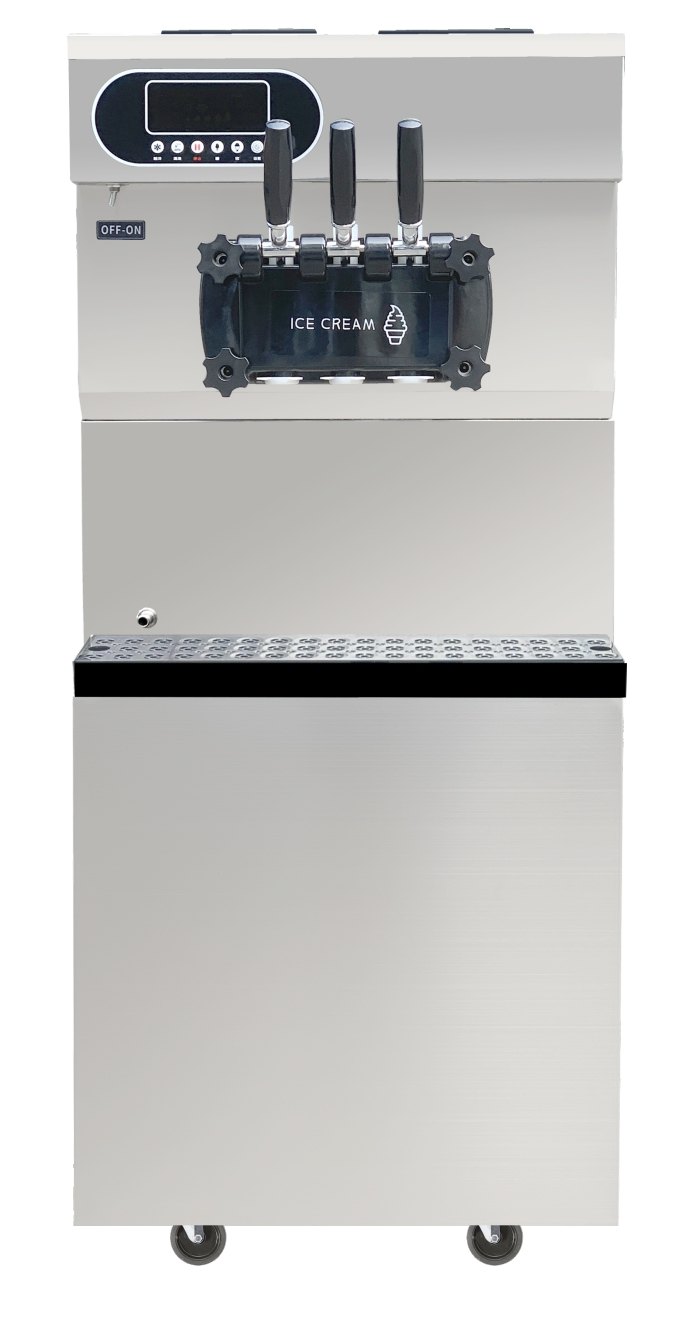
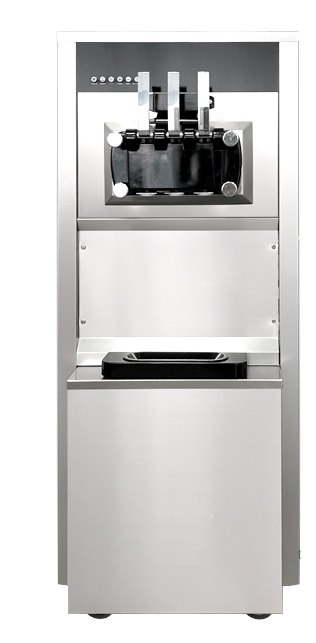
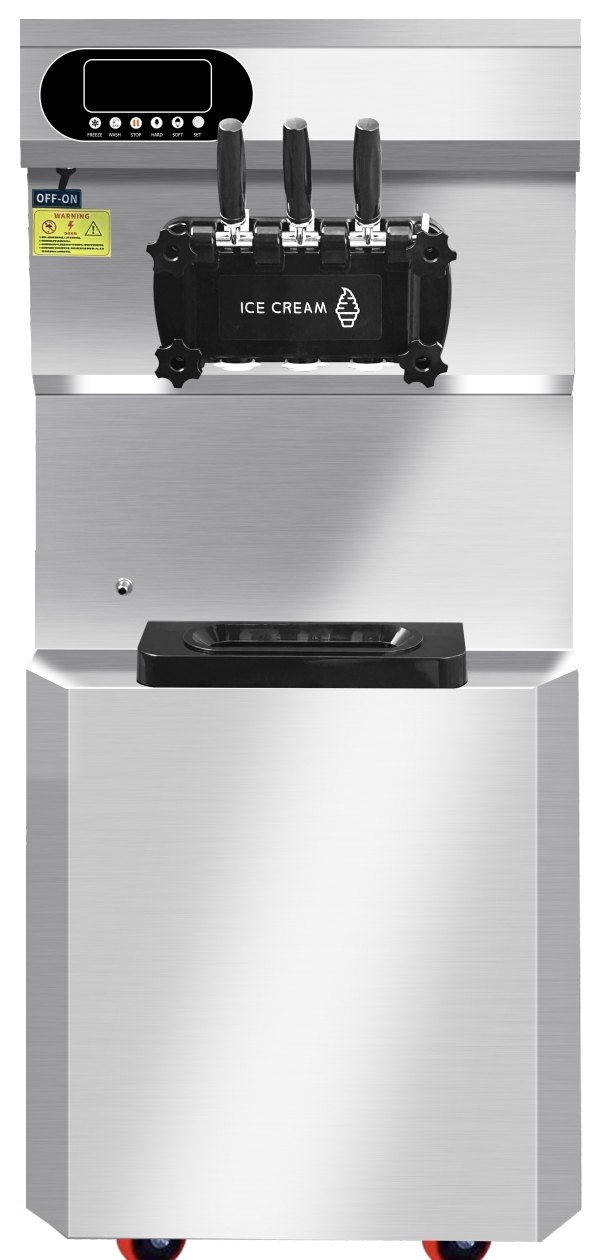
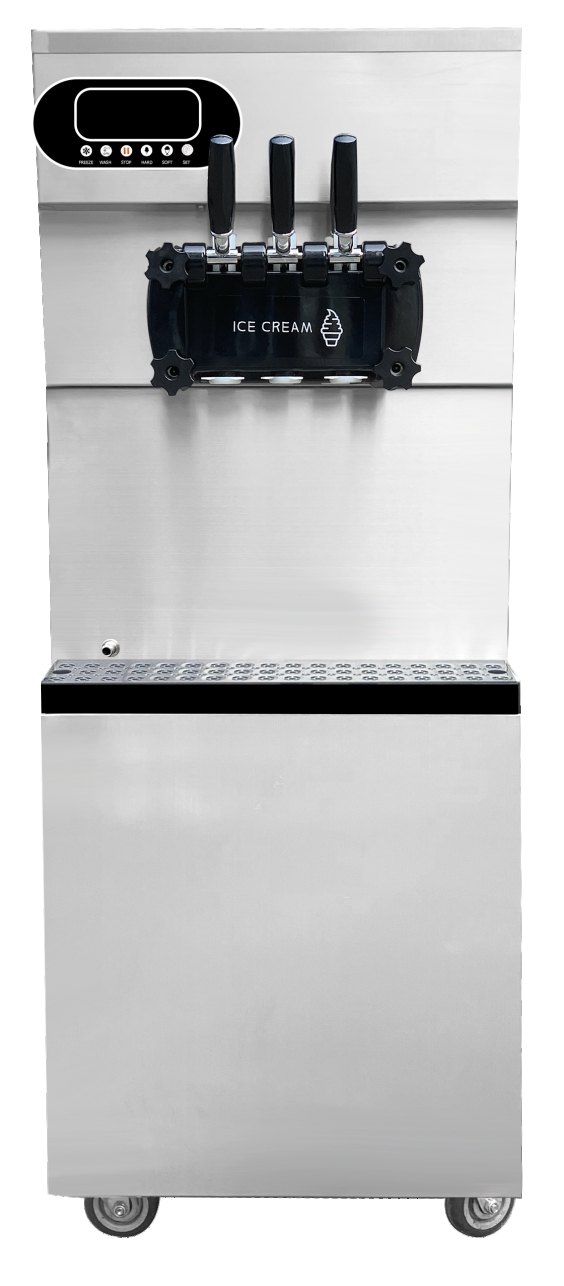
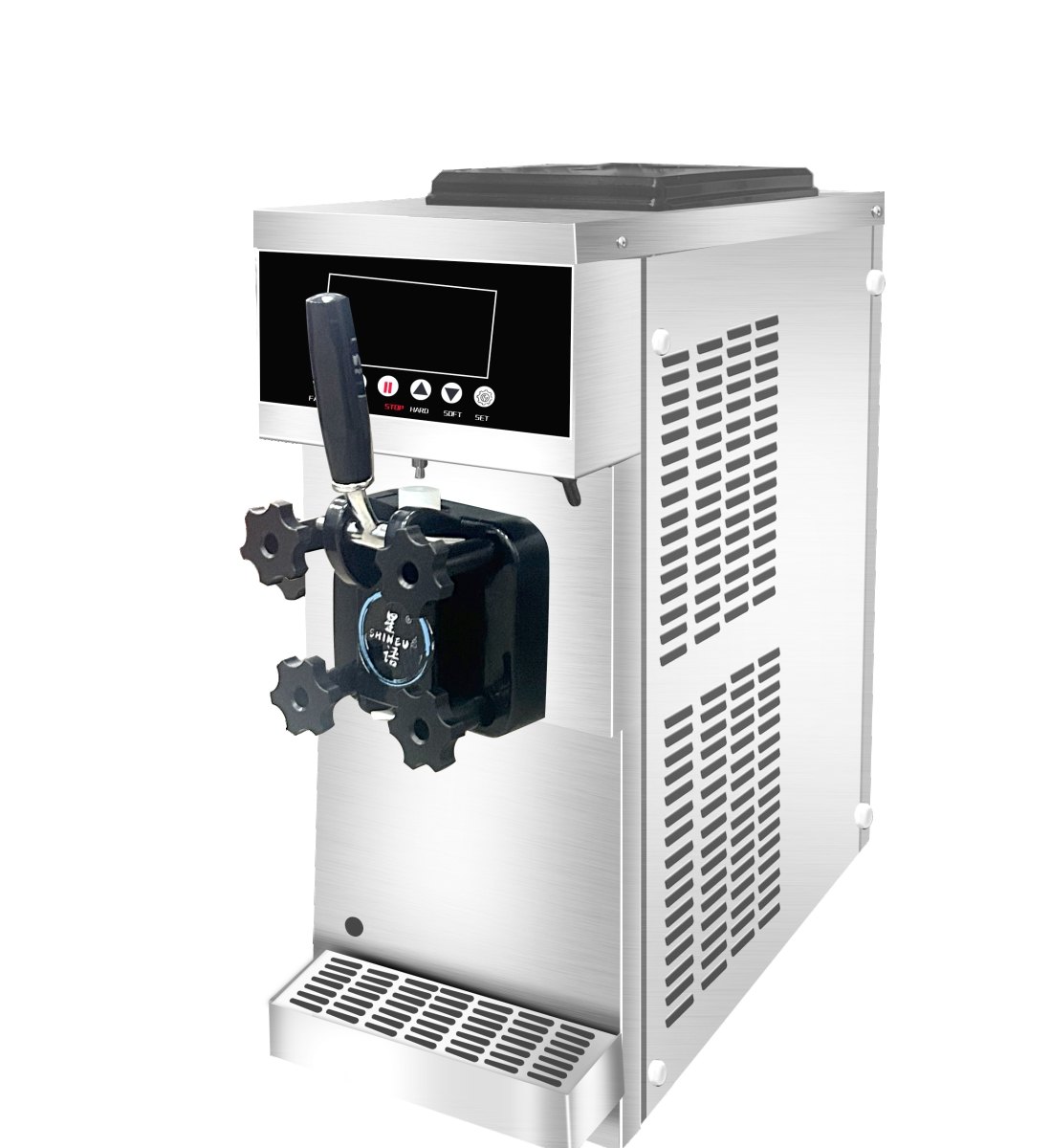
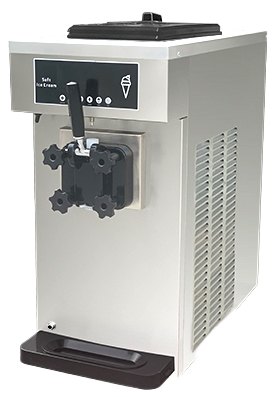
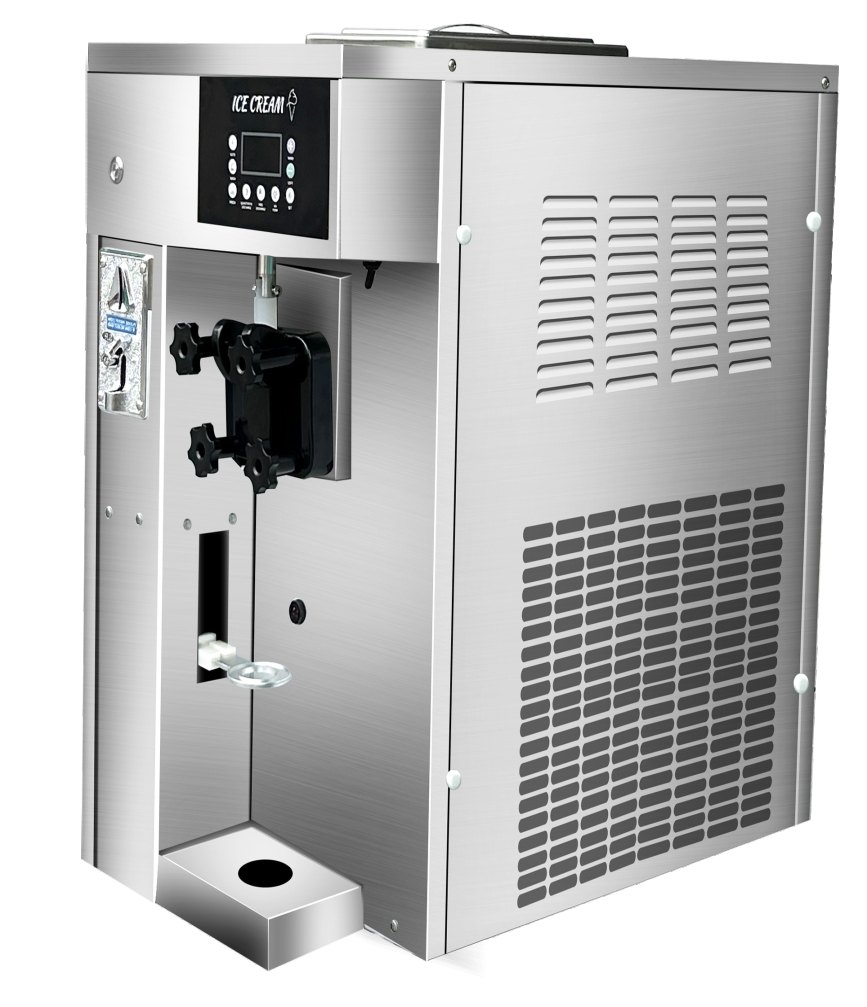
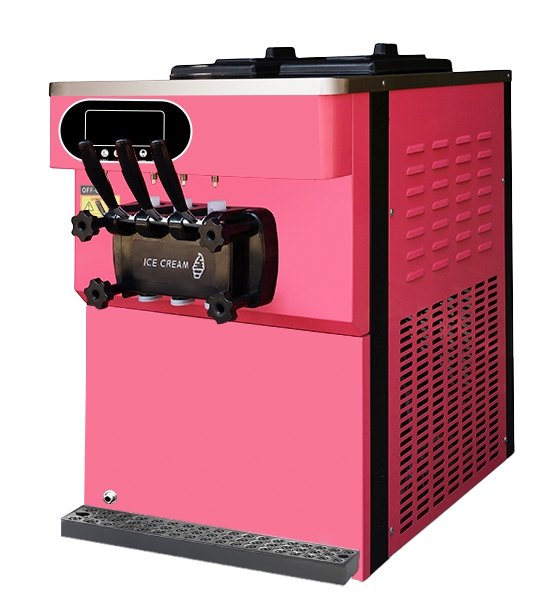
Photos of this range
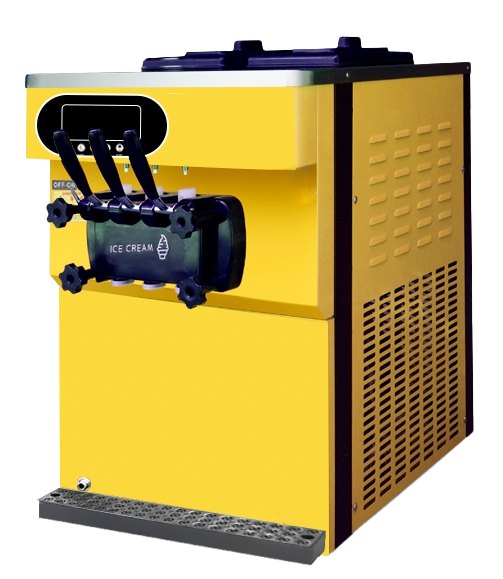
Units shown as supplied. Configuration is agreed per order.
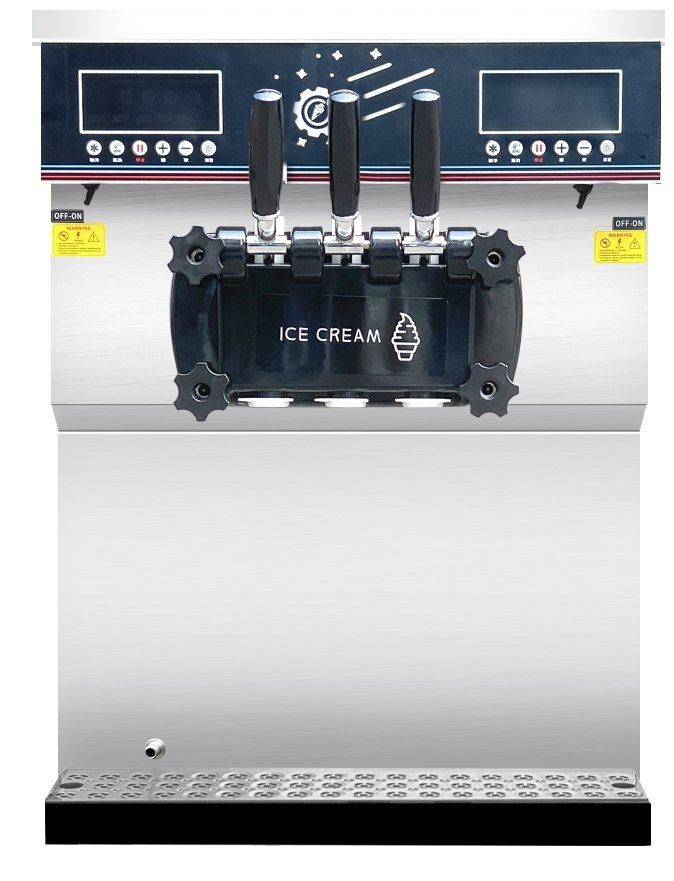
Show the other 9 photos
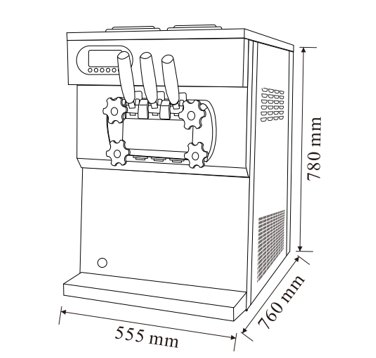
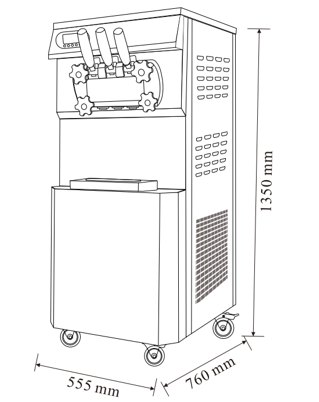
Size drawings
Overall dimensions in millimetres, one drawing per model. Drawings are supplied with the machine.
Range: format, outlets and system count
The range is grouped by three decisions a buyer has to make before anything else: whether the machine stands on the floor or on a counter, how many outlets it dispenses from, and whether it is built as a single system or a twin system. Outlet count is normally quoted as one, two or three; if you need more than three, say so in the enquiry and we will confirm what can be built.
Single and twin system describe how many independent freezing circuits the machine carries. A twin system runs the two sides separately, which matters when one flavour sells heavily and the second only occasionally, or when one side is being cleaned while the other keeps serving. Confirm the system count against the outlets you order instead of assuming every outlet has its own circuit.
Electrical supply, plug type and net weight change with the model, and so does rated output. Two machines that look alike in a catalogue can differ in barrel size, compressor and cabinet depth, so compare the figures for the exact configuration rather than for the range as a whole.
What changes between soft serve machines
Soft serve is dispensed from a freezer barrel at a semi-frozen consistency. Every machine in this category does the same basic job, but three choices decide whether it fits your operation: the number of flavours you want to serve at the same time, the hourly output you need at peak, and the physical format — a countertop unit for a small kiosk or a floor standing cabinet for a busy location. Getting these three right matters more than comparing decorative details.
Flavour count is the most visible difference. A single-flavour unit keeps one mix and is simple to operate and clean. Two and three-flavour machines carry separate hoppers and barrels, so you can offer vanilla and chocolate, or a rotational special, without stopping service to change products. More flavours mean more hoppers to clean at closing, so choose on what you will actually sell, not on what looks impressive in a catalogue.
Output is the second filter. The rated figures on this page span roughly 25 to 70 litres per hour, but a nameplate number is stated under declared conditions, not in a busy shop on a hot day. If you expect long queues, leave headroom: pick a machine whose rated output is comfortably above your realistic peak, because mix temperature, overrun and the size of each serving all pull real-world throughput down. A machine running near its ceiling all afternoon will struggle to hold texture.
Structure is the third. Countertop units suit limited floor space and can be placed behind a counter, but they still need ventilation clearance and a drain. Floor standing cabinets give you a larger hopper and a more stable platform, and they usually recover faster between rush periods. Neither is automatically better; the right choice follows your available space and service pattern.
Options worth deciding before you order
Several options change both the price and the way the machine is used, so it helps to decide them early. Pre-cooling keeps the mix in the hopper at a stable low temperature before it enters the freezing barrel; it is useful where the machine sits in a warm environment or where the mix is loaded well before service. An air pump, sometimes called an overrun pump, introduces controlled air into the mix. It increases volume and changes mouthfeel, and it is a legitimate configuration choice rather than a quality shortcut — but you should know which setting you want before you compare machines.
A liquid-level alarm warns when a hopper is running low, reducing the chance of serving a thin product during a rush. A one-touch thaw function helps with end-of-day cleaning. Material handling also matters: removable stainless steel hoppers and detachable drip trays make the closing routine faster, and in a food business the cleaning routine is what determines whether the machine stays in spec.
Hopper material is another point to confirm. Polycarbonate hoppers are light and let staff see the mix level at a glance; stainless steel hoppers are more robust and easier to sanitise in some setups. Ask for the material of the parts that touch the mix, and ask for a written material list if your local food authority requires one.
How to read the specification table
The table above lists rated output, electrical supply, power, refrigerant, weight and dimensions by configuration. Dimensions are given as length x width x height in millimetres, and packing size is the single-unit carton. Net and gross weight are shown together so you can plan handling and freight. Where a field has no confirmed value for a given configuration, that row is omitted rather than filled with an estimate — an invented number is worse than no number.
Voltage and plug type are deliberately not fixed on this page. We supply to the customer's requirement, so tell us your supply and plug shape in the enquiry form and we will confirm what can be provided. Do not assume that a machine shown at 220V/50Hz can be plugged into a 110V/60Hz circuit simply because both figures appear somewhere on the page; they are separate configurations and must be specified in advance.
Refrigerant availability varies by configuration, and destination market regulations apply. If your country restricts certain refrigerants, say so in the enquiry so the right charge can be proposed before shipment rather than after arrival.
Where this equipment is used
Soft serve machines are the default choice for ice cream shops, dessert cafes, movie theatres, hotel buffets and food trucks, because product is dispensed on demand and there is no need for a separate hardening step. They also suit bubble tea shops adding a soft serve line to an existing menu. For a small shop, see our recommended setup for an ice cream shop; for a higher-end gelato menu, the equipment mix is different and is covered on the gelato shop page.
Wear parts such as scraper blades, door seals and dispense valves are the items most often replaced on a soft serve machine. The parts catalogue lists common consumables with fitment information, so you can plan maintenance without guessing which piece to order.
Questions buyers ask
How many flavours do I need?
Serve the flavours you will actually sell. Each extra flavour adds a hopper, a barrel and a cleaning step.
Can I use it on 110V?
Some configurations are listed at 110V/60Hz. Confirm the exact configuration and plug type in your enquiry; do not assume.
What affects real output?
Mix temperature, overrun setting, serving size and ambient conditions. Rated figures are nameplate values under declared conditions.
How do I choose between countertop and floor standing?
Space, hopper capacity and recovery speed during peak service are the deciding factors.
Related
Equipment for an ice cream shop
How this machine fits into a working setup, with the equipment that goes with it.
Open →Questions buyers ask
Output, supply, materials and what has to be confirmed before an order.
Open →Parts and replacement components
Wear items and spares listed by fitment, for maintenance after the machine is in service.
Open →How orders are handled
Guangzhou Baiyi is an ice cream equipment supplier based in Guangzhou, China.
We are responsible for specification definition, order follow-up, documentation and logistics coordination.
Inspection before shipment can be arranged; scope and provider confirmed at order.
Send your requirements
Tell us where you are and what you need. * Required