
Block Ice Machines by Daily Capacity
Updated 27 November 2026
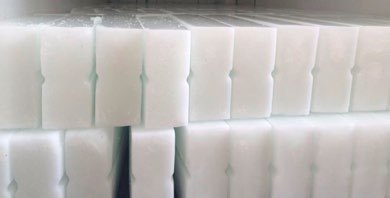
A block ice machine freezes water into large solid blocks rather than small pieces. Blocks melt slowly because the surface area is small relative to the mass, so the ice holds cold for a long time — which is why this equipment is used where ice has to travel or sit for hours, not where it has to chill a glass quickly.
Part of Ice machines
Available options
| Selection factor | Available options |
|---|---|
| Daily capacity | 0.3 / 0.5 / 1 / 2 / 3 / 5 tonnes per 24 h; higher output on request |
| Cooling arrangement | Direct cooling or brine |
| Block weight | Agreed per order, together with the daily tonnage |
| Ice block mould size | 5 kg 220×80×460 mm · 10 kg 220×80×650 mm · 25 kg 320×120×820 mm |
Options are listed by configuration, not by model. Confirm the exact configuration and destination supply in your enquiry; material affects quotation.
Specifications
Six capacities are offered: 0.3, 0.5, 1, 2, 3 and 5 tonnes per 24 hours. Higher output can be discussed as a custom requirement. Block weight, mould arrangement and freezing time are agreed per order.
Photos of this range
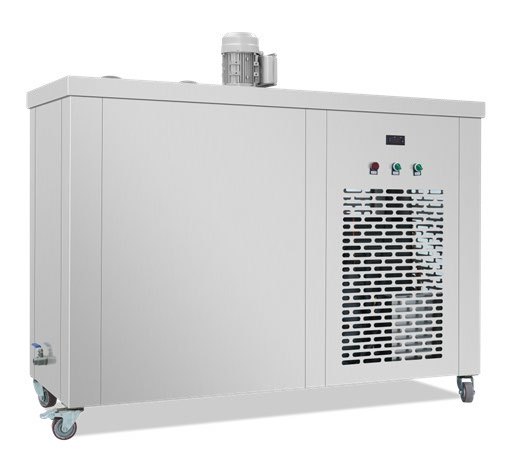
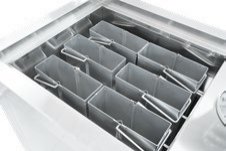
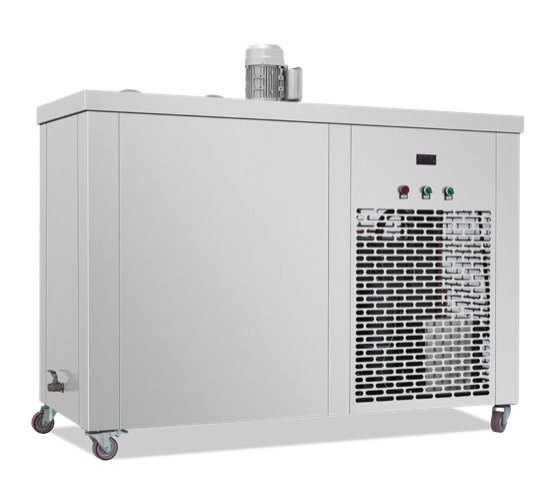
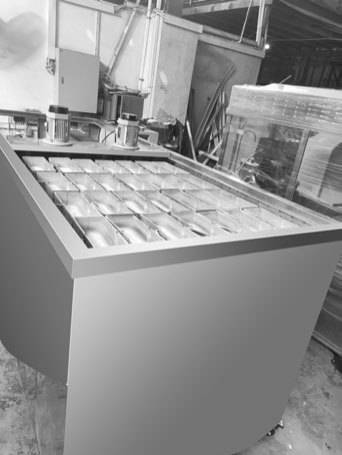
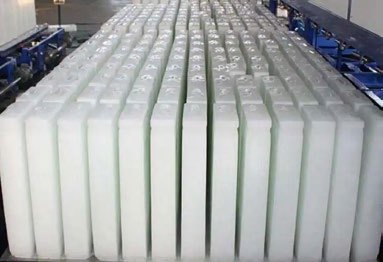
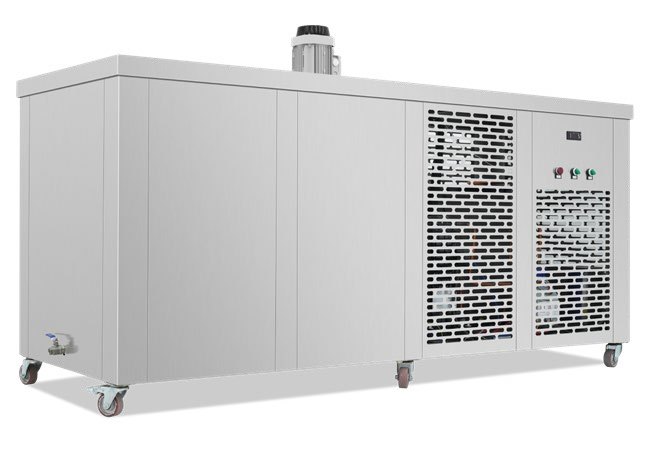
Units shown as supplied. Configuration is agreed per order.
Show the other 4 photos
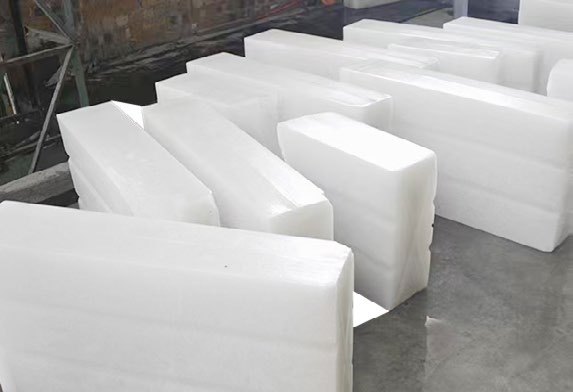
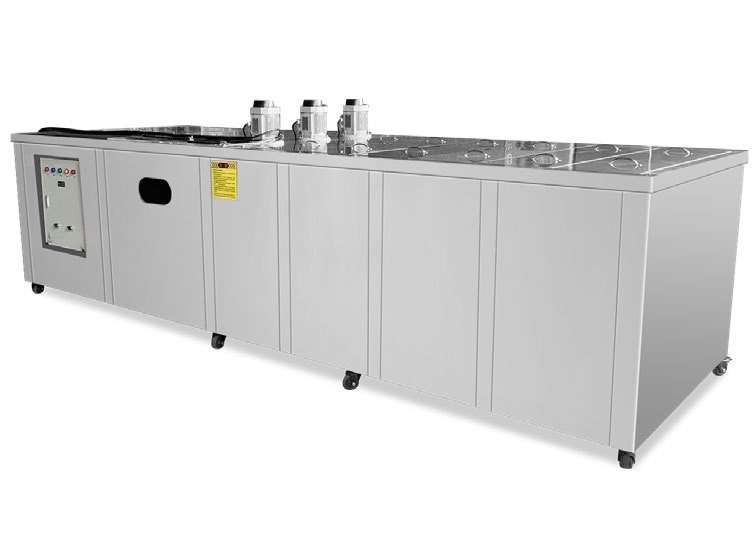
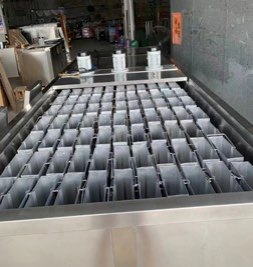
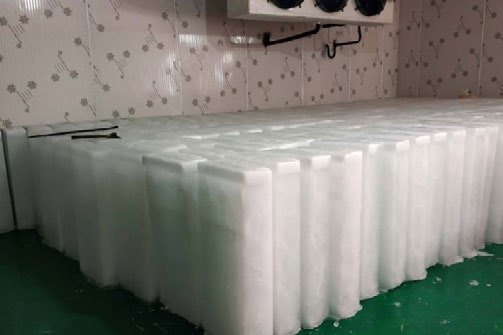
Range: six capacities from 0.3 to 5 tonnes per day
The range runs 0.3, 0.5, 1, 2, 3 and 5 tonnes per 24 hours. The small end suits a fishmonger, a market stall or a shop that needs blocks for display and short transport; the large end is plant equipment that runs continuously and needs a fixed installation, a water supply and space for handling blocks.
Capacity is stated per 24 hours of running. It assumes the machine is working through a full cycle, so the practical figure for a given site depends on water temperature, ambient temperature and how often blocks are harvested. State the block weight you want as well as the daily tonnage — the two together decide the mould count and the cycle.
If you need more than five tonnes a day, tell us the target and the site conditions; that is handled as a custom configuration rather than a catalogue model.
Direct cooling and brine types
Two cooling arrangements are used in this category. Direct cooling freezes the block against a refrigerated surface, which is compact and heats up and down quickly. Brine systems freeze the block in a salt solution, which is the traditional approach for large blocks: it is slower to start but tolerant of continuous duty and large moulds.
Which one suits you depends on block size, how many blocks you harvest per shift and how much space the plant has. Ask for the arrangement that matches your block weight rather than choosing on price alone, because the two types handle large moulds differently.
Where block ice is used
Block ice goes where cold has to last: fishing vessels and landing sites, seafood markets, long-distance cold chain, ice plants supplying other businesses, and catering or event work where crushed or flake ice would melt before it is needed.
Blocks are also the raw material for crushing and shaving. If your business sells crushed ice or shaved ice desserts, a block machine can feed a separate crusher or shaver instead of you buying ice in. Where the block will be processed, say so in the enquiry, because block density and size affect how it breaks down.
For small-piece ice — cube, crescent, flake, crushed or snow flake — see the ice makers range this page belongs to.
Ice block moulds and how they are sized
For block ice production, three mould sizes are in regular use. These are mould dimensions — the space the ice forms in — and are a separate dimension from daily output. A 5 kg block uses a mould of 220 x 80 x 460 mm and takes about four hours to freeze. A 10 kg block uses 220 x 80 x 650 mm, also about four hours. A 25 kg block uses 320 x 120 x 820 mm and takes about eight hours.
Freezing time depends on water temperature, ambient conditions and the freezer it is placed in, so treat these as indicative figures from the source quotation rather than guarantees. If you need a specific output per shift, tell us the block size and we will confirm how many moulds fit your cycle.
Questions buyers ask
How much ice do I need per day?
Base it on your busiest day plus storage losses, not on an average week.
What block weight can I have?
Block weight is agreed per order; tell us the weight and the daily tonnage together.
Direct cooling or brine?
It depends on block size and duty cycle. Send the block weight and we will confirm the arrangement.
Can I go above five tonnes a day?
Yes, as a custom configuration — send the target output and site conditions.
Related
How orders are handled
Guangzhou Baiyi is an ice cream equipment supplier based in Guangzhou, China.
We are responsible for specification definition, order follow-up, documentation and logistics coordination.
Inspection before shipment can be arranged; scope and provider confirmed at order.
Send your requirements
Tell us where you are and what you need. * Required